


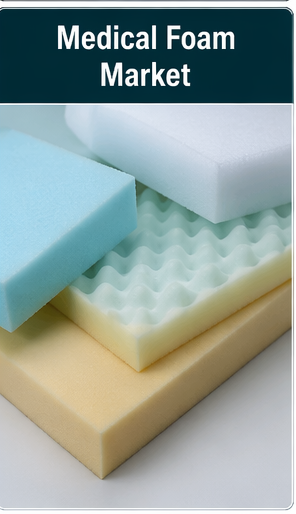
Medical foam has evolved from a basic cushioning material into a critical component of modern healthcare systems. Its versatility, hygiene properties, and adaptability make it indispensable across wound care, surgical applications, and medical device manufacturing. As healthcare systems worldwide shift toward patient-centric and technologically advanced treatments, the demand for high-performance medical foam solutions continues to expand.
Advancements in Material Science and Performance
Recent innovations in medical grade foam have significantly improved its functional capabilities. One of the most widely used materials, polyurethane foam, is now engineered with enhanced breathability, moisture management, and antimicrobial properties. These features are particularly valuable in wound care, where maintaining an optimal healing environment is crucial.
The latest generation of foam wound dressing products is designed to balance absorption and moisture retention. This ensures that wounds remain hydrated without becoming overly saturated, reducing the risk of infection and accelerating tissue regeneration. Additionally, multi-layered foam structures are gaining traction, combining soft contact layers with highly absorbent cores to optimize performance in both acute and chronic wound scenarios.
Another notable trend is the integration of smart technologies into foam materials. Researchers are developing sensor-enabled foams capable of monitoring wound conditions such as temperature, pH levels, and exudate volume. These innovations align with the broader movement toward digital healthcare and remote patient monitoring.
Growing Role in Wound Care and Surgical Applications
The importance of foam dressing wound solutions has grown alongside the increasing prevalence of chronic conditions such as diabetes and pressure ulcers. Foam-based dressings are now considered a standard of care due to their ability to provide cushioning, reduce pressure, and protect delicate tissue.
In surgical settings, medical foam is used for positioning, padding, and post-operative care. Its ability to conform to the body while maintaining structural integrity makes it ideal for minimizing patient discomfort during long procedures. Furthermore, sterile and hypoallergenic variants of medical grade foam are now widely available, ensuring compatibility with sensitive skin and reducing the risk of adverse reactions.
Another emerging application is in negative pressure wound therapy (NPWT), where specialized foam materials are used to distribute suction evenly across the wound bed. This technique has shown significant success in promoting faster healing and reducing hospital stays.
Sustainability and Regulatory Innovations
Sustainability has become a defining trend in the development of polyurethane foam and other medical materials. Manufacturers are increasingly focusing on eco-friendly production processes, including the use of bio-based raw materials and recyclable foam structures. This shift is driven not only by environmental concerns but also by stricter regulatory requirements in global healthcare markets.
In addition, compliance with international standards for medical grade foam is becoming more stringent. Regulatory bodies are emphasizing biocompatibility, sterilization compatibility, and long-term safety. As a result, companies are investing heavily in research and development to meet these evolving standards while maintaining cost efficiency.
A growing area of interest is antimicrobial foam technology. By incorporating silver ions or other antimicrobial agents into foam wound dressing products, manufacturers are addressing the increasing threat of hospital-acquired infections. These advanced materials provide an added layer of protection, particularly in high-risk environments such as intensive care units.
Market Momentum and Future Outlook
The accelerating adoption of advanced medical foam solutions reflects a broader transformation in healthcare delivery. According to Grand View Research, the global market is experiencing strong growth driven by rising healthcare expenditures, an aging population, and the increasing incidence of chronic wounds.
In fact, a report published by Grand View Research indicates that the global medical foam market size is projected to reach USD 66.34 billion by 2033, growing at a CAGR of 10.3% from 2026 to 2033. This projection underscores the expanding role of foam-based materials across diverse medical applications.
Beyond traditional uses, polyurethane foam is finding new opportunities in wearable medical devices and prosthetics. Its lightweight and flexible nature makes it ideal for enhancing patient comfort and mobility. Similarly, foam dressing wound technologies are being adapted for home healthcare settings, enabling patients to manage their conditions more effectively outside clinical environments.
The integration of automation and precision manufacturing is also shaping the future of medical grade foam production. Advanced cutting and molding techniques allow for highly customized foam components tailored to specific medical devices or patient needs. This level of customization is particularly valuable in orthopedics and rehabilitation.
As healthcare systems continue to prioritize efficiency and patient outcomes, the demand for high-quality foam wound dressing solutions is expected to rise. Innovations in material science, combined with a focus on sustainability and digital integration, are positioning medical foam as a cornerstone of next-generation healthcare.
In summary, the evolution of medical foam is closely tied to broader trends in medical technology and patient care. From advanced polyurethane foam formulations to intelligent foam dressing wound systems, the industry is undergoing a period of rapid transformation. As these innovations continue to mature, medical foam will play an increasingly vital role in improving clinical outcomes and enhancing the overall quality of care.

 English
 Arabic
 French
 Spanish
 Portuguese
 Deutsch
 Turkish
 Dutch
Dutch
 Italiano
 Russian
 Romaian
 Portuguese (Brazil)